Computer Science (MSCS)
Online Master of Science

Online Master of Science

Flexible Learning Designed for Working Professionals.
The MSCS program is designed to provide both flexibility and academic rigor. Students complete coursework through an online learning environment that supports interaction with faculty and peers while allowing learners to balance professional and personal commitments.
Flexible Online Delivery
Complete coursework from any location while maintaining professional responsibilities.
Accelerated Timeline
Finish your degree in as little as two years.
Accessible Admission Requirements
Applicants from all academic backgrounds are encouraged to apply. GRE and GMAT scores are not required.
Industry-Relevant Curriculum
Courses align with rapidly growing technology sectors including AI, cybersecurity, cloud computing, and big data analytics.
Applied Learning Experience
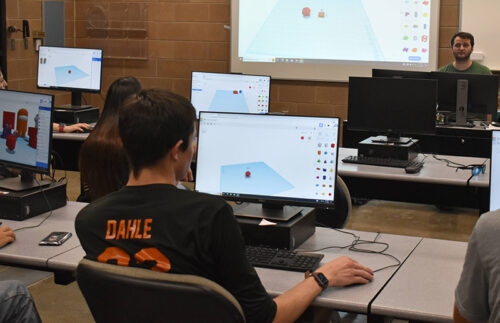
Hands-on projects, collaborative assignments, and research activities emphasize real-world problem solving.
Industry Engagement
Partnerships with employers and industry professionals support opportunities for professional networking, credentials, and certification pathways.
The curriculum integrates foundational computer science principles with advanced topics in emerging technology areas.
This combination of coursework prepares students to work across multiple domains within modern computing environments.
Graduates of the MSCS program develop both advanced technical capabilities and professional competencies essential for modern computing roles.
Students learn to:
Graduates also develop:
These skills will be useful for students transitioning from other fields looking to gain foundational computer science knowledge, hands-on technical project experience, and prepare for entry into technology careers. Students from fields such as business, engineering, science, mathematics, and social sciences can apply computing expertise within their disciplines to expand career opportunities.
For individuals already working in computing or technology fields, the degree supports specialization in emerging technologies, career advancement into senior technical roles, and increased leadership and research opportunities.
Online MS in Computer Science
Assistant Professor of Computer Science
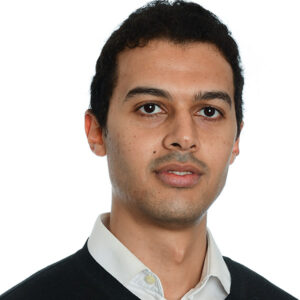
Ahmed Shafee is an Assistant Professor in the Department of Computer Science at Adams State University, USA. He received his B.S. and M.S. degrees in Computer Engineering from Helwan University, Cairo, Egypt, in 2011 and 2018, respectively, and earned his Ph.D. in Electrical and Computer Engineering from Tennessee Tech University, USA.
His research interests lie at the intersection of machine learning, cybersecurity, and intelligent computing systems. His work focuses on robust and privacy-preserving machine learning, AI-driven cybersecurity and intrusion detection, security and privacy in edge and cloud computing, and cyber-physical system security.
Assistant Professor of Computer Science
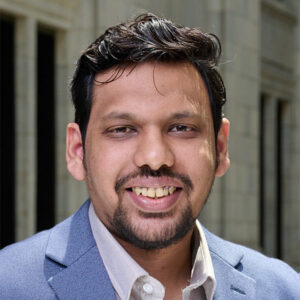
Dr. Kazi Zawad Arefin is an Assistant Professor of Computer Science at Adams State University whose research focuses on artificial intelligence, data science, and mobile health (mHealth). He develops AI-driven, non-invasive physiological monitoring systems using smartphone sensors and machine learning to improve remote healthcare access and patient engagement, particularly in underserved communities.
Dr. Arefin earned his Ph.D. in Computer Science (2020–2025) and M.S. in Computer Science from Marquette University, and his B.S. in Computer Science and Engineering (2013–2016) from North South University, Bangladesh. He teaches across the computer science curriculum and actively mentors graduate students in research and career development.
Online MS in Computer Science
No. The program welcomes applicants from all academic disciplines, including those seeking to transition into computing careers.
Yes. The MSCS program is delivered entirely online, allowing students to complete coursework from anywhere.
Students can complete the degree in as little as two years over the course of five semesters (including summer). Students begin in the Fall semester and finish in the Spring semester of their second year.
No. GRE and GMAT scores are not required.
Graduates commonly pursue careers in: