

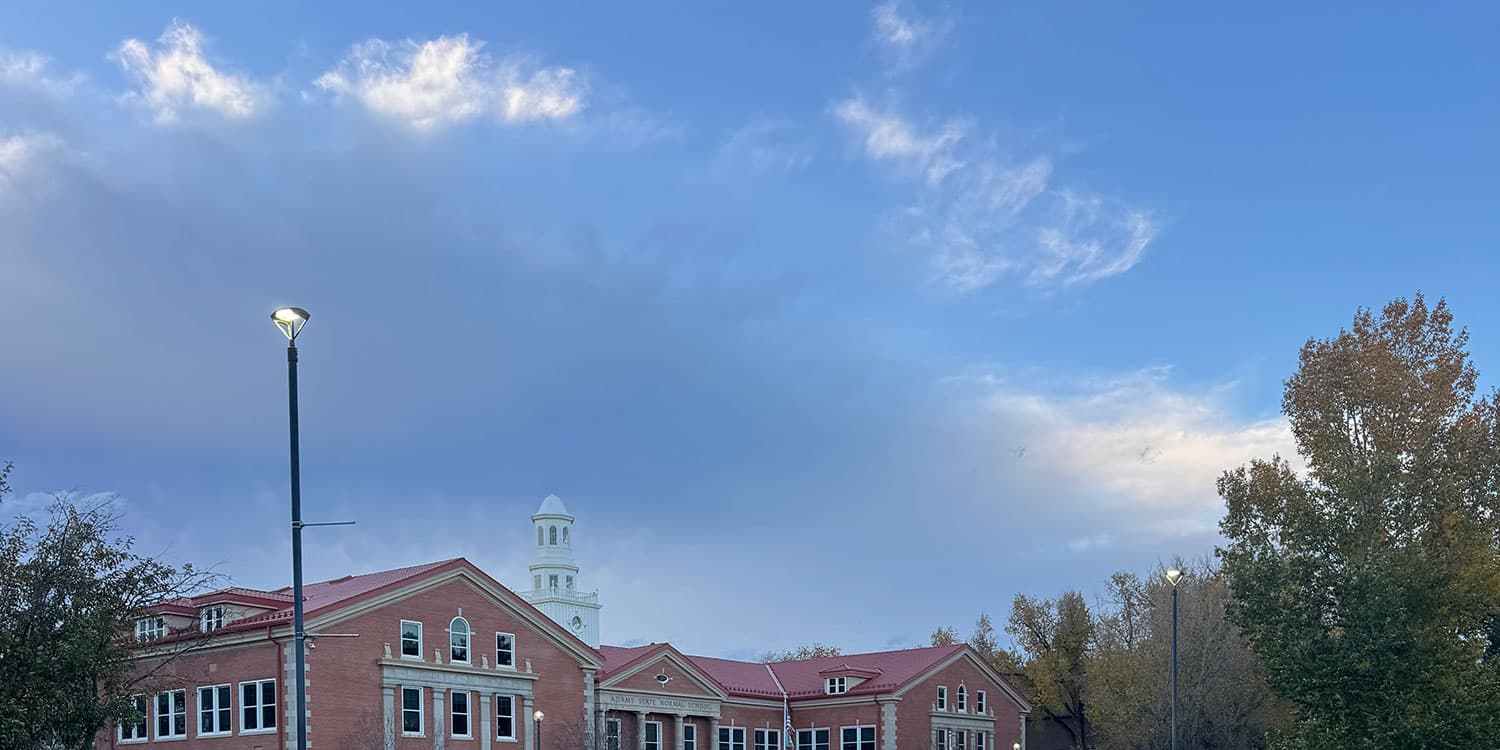
Adams State University has been selected as one of 16 colleges and universities nationwide to participate in From Campus to Career, a national initiative supported by Lumina Foundation designed to scale career-connected high-impact practices (HIPs) and strengthen workforce outcomes for students.
Through the initiative, Adams State will receive $100,000 over two years, along with tailored technical assistance and cohort-based support from national higher education intermediaries to expand and strengthen career-connected learning opportunities.
High-impact practices such as internships, undergraduate research, service learning, capstone projects, and student employment are widely associated with increased student engagement, deeper learning, and higher completion rates. This initiative focuses on intentionally connecting those experiences to career pathways and labor market demand so that students graduate prepared to demonstrate the skills employers need.
“At Adams State, we are committed to ensuring that every student graduates not only with a degree, but with meaningful experiences that connect learning to career opportunity,” said Assistant Vice President of Academic Affairs Nick Saenz, Ph.D.
Director of the Center for Teaching, Innovation, and Research Artemis Preeshl, Ed.D., said: “Participation in this national initiative will help us expand access to high-quality, career-connected learning and strengthen outcomes for our students.”
As part of the initiative, Adams State plans to expand internships in key industries, embed career-connected projects into required coursework, improve employer partnerships, enhance skills mapping into academic programs, and initiate team internships and faculty externships. The effort will reduce equity gaps among first-generation, transfer, rural, and any other students who need additional support.
Lumina launched From Campus to Career to help institutions scale career-connected high-impact practices that strengthen the value of a bachelor’s degree.
“Too many students complete meaningful academic experiences without clear pathways to translate those experiences into career opportunities,” said Jasmine Haywood, strategy director for credentials of value at Lumina. “If a credential is going to hold value in the labor market, students must graduate with the ability to demonstrate the skills and competencies employers need. Career-connected high-impact practices are one of the most powerful tools we have to make that connection visible and real.”
The 16 selected institutions represent a diverse cross-section of higher education, including regional public universities, Historically Black Colleges and Universities (HBCUs), Hispanic-Serving Institutions (HSIs), and large research universities. Together, they will serve as national models for integrating academic learning with career preparation.
“In an era of rising skepticism about the value of college, strengthening the connection between learning and work is essential,” said Debra Humphreys, vice president of strategic engagement at Lumina. “When students can clearly see and show how their education prepares them for meaningful careers, the value of a credential becomes tangible.”
The initiative is implemented in partnership with Excelencia in Education, the American Association of State Colleges and Universities (AASCU), and the Center for Innovation in Postsecondary Education (CIPE), which will support participating institutions through technical assistance and cross-campus learning opportunities.