
Article by Josh Rhoten, Senior Science Writer, Colorado State University
When David Cody graduated from Alamosa High School in 2023, he headed east to Florida to pursue a degree in engineering. He thought he wanted to start the next chapter of his life far from home.
But, a year later, he decided to return to Colorado to enroll in Adams State University in his hometown of Alamosa. A large part of his decision, he said, was the launch of the new Mechanical Engineering Partnership Program between ASU and Colorado State University; it would allow him to get a high-quality mechanical engineering education without having to leave the San Luis Valley.
“I had taken some courses through the program in high school just as it launched and before I left – so I had some familiarity,” he said. “But in addition to wanting to come home, the biggest factor was the affordability of the program. I was able to pay in-state tuition throughout – including the lower overall student tuition at ASU for the first half of the program. That made it an easy decision.”
Cody is one of six students graduating from the program this spring. On May 16, he will receive a Bachelor of Science in Mechanical Engineering from CSU as part of the first cohort in the rural outreach program, even though he never attended a class at the Fort Collins campus.
The universities launched the unique degree partnership in fall of 2022. A primary goal was to strengthen the pipeline of highly skilled and technically trained workers who are badly needed in the remote San Luis Valley, now and in the future.
There isn’t another engineering program within 100 miles of the area. So, the partnership provides high-achieving students such as Cody a chance to live close to home, which reduces their financial burden, and a clear path to lucrative job opportunities through study of the exact same curriculum and course work offered at CSU.
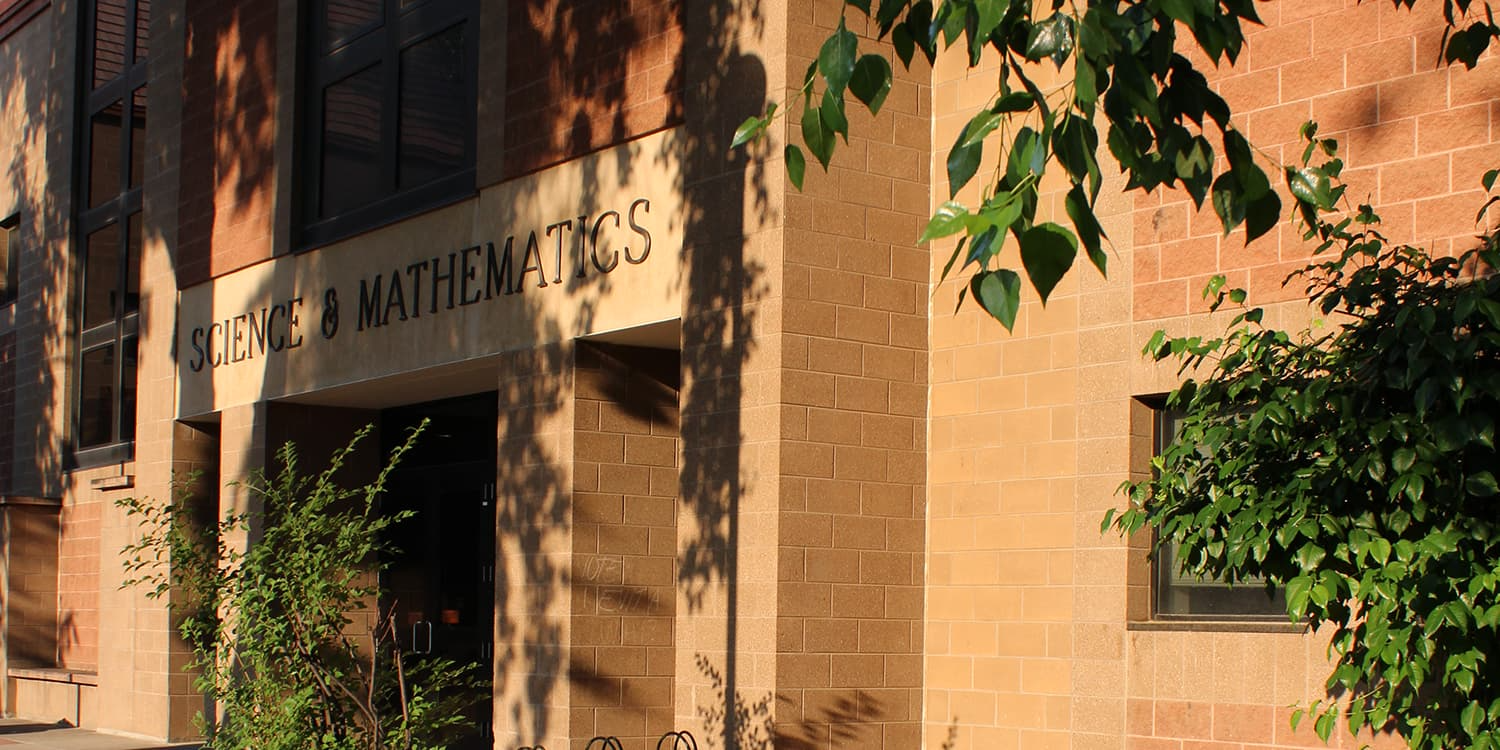
Adams State provides all lower-division coursework for the first two years of the program, while CSU provides all upper-division coursework for the program. Face-to-face instruction over the final two years comes from CSU mechanical engineering faculty based in Alamosa. Lab space and a modern machine shop for the program are housed in a $1.6 million addition to William Porter Hall at ASU, which was specially built with the program in mind; it enables many hands-on learning opportunities.
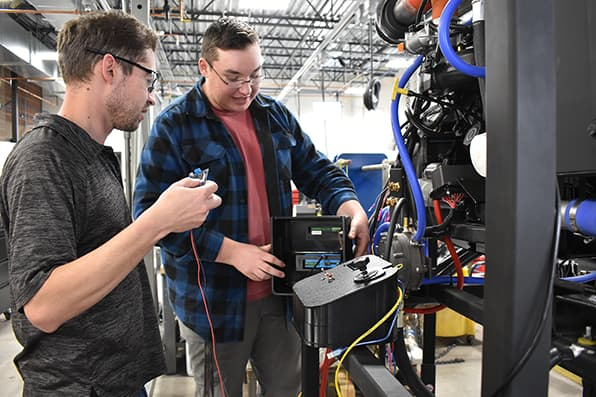
Cody is one of six students graduating this spring, and there are 56 students currently enrolled. To date, the program has enrolled 97 students – of which 40 percent are considered low income.
The program also offers clear pathways for minority students into engineering fields. Adams State is a Hispanic-Serving Institution with an overall Hispanic student population of nearly 40 percent; four of the six graduates from the degree program this cycle are Hispanic.
Scott Clayton is a native of the San Luis Valley area who grew up with a talent for science and math disciplines, just like Cody. He serves as the lab support engineer for the degree program – helping to coordinate as a CSU employee on the ground while also offering mentorship to students, technical support in the lab spaces and program development.
He said many students coming from the area care from farming families and are some of the most ingenious he has worked with.
“This program leverages those kinds of foundational skills that transfer easily to the world of engineering while also helping to keep that talent in the Alamosa community and the broader region – including places like Pueblo that are facing similar workforce needs,” he said. “Coming to Fort Collins for school can be overwhelming for young students. This is a fantastic opportunity for those who may be nervous about leaving home but also understand and see the value and are well qualified for an engineering degree from a university as respected as CSU.”
While serving in the Adams State School of STEM, Physics Professor Matt Nehring played a vital role in launching the dual-university program.
“I appreciate the support on every level we received establishing the program, from federal grants to local contractors working to expand Porter Hall,” he said. “We committed to replicating all components of the CSU Mechanical Engineering curriculum here so that students on the Adams State campus had the same educational experiences as their Fort Collins counterparts. Saturday, when that first class crosses the stage to receive their diploma, it makes all the time and effort very worthwhile.”
Cody recently finished an internship and was part of a team that presented their senior design project during the 2026 Engineering Days showcase event at CSU. He said he was proud to be part of the first group from the program to travel and participate in the annual spring rite of passage for CSU engineers.
He said his next stop will be a full-time job as a project engineer at Southland Industries in Cheyenne.
“The program provided me a fantastic experience overall and I really came to appreciate the cohort and community it supported as well,” Cody said. “The class sizes were substantially smaller than you would likely see at large engineering programs, and there was a lot of opportunity for hands-on learning.”
Funding for the addition to William Porter Hall lab addition included federal funding from congressional appropriations supported by U.S. Sens. Michael Bennet and John Hickenlooper of Colorado. Additional funding came from Adams State’s institutional funds and the El Centro Sierra Blanca Grant through the Department of Education. Although not used in the construction costs, Colorado State University received $1 million from the federal community project funding supported by U.S. Rep. Joseph Neguse to assist with the mechanical engineering program.