

The Adams State University Juntos program provided free training sessions for local law enforcement. Thomas E. Gibbons, retired senior investigator for the New York State Police presented on “Trauma-Informed Communication for Law Enforcement.”
The sessions, held in in mid-October, included practical, trauma-informed techniques for interviewing individuals impacted by trauma or crime. The training emphasized creating a safe and respectful environment, building trust, using nonjudgmental communication, and reducing the risk of re-traumatization.
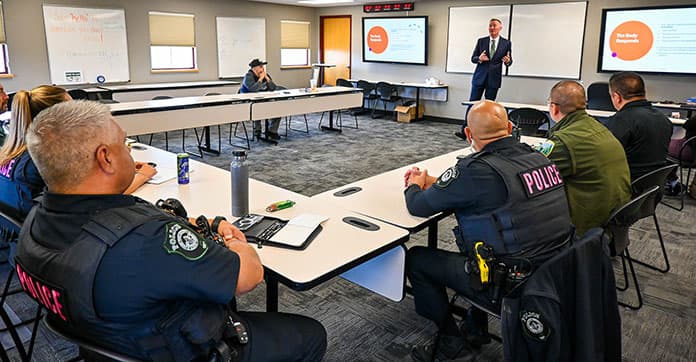
Gibbons appreciated the opportunity to work with the Adams State Police Department and other local police departments. “Your commitment to understanding the impact of trauma, approaching interactions with empathy and compassion, and building trust through respectful communication demonstrates a genuine investment in the safety, dignity, and well-being of those you serve.”
The Juntos grant provided resources and opportunities to expand access to specialized training, engage with technical assistance providers, and be more intentional in identifying ways to strengthen and continuously improve response efforts and support survivors. Juntos Project Director Desiree Lewis collaborated with Adams State campus law enforcement to identify and coordinate training opportunities that strengthen officers’ ability to respond to domestic violence, sexual assault, and stalking in a culturally responsive and trauma-informed manner.
“This training brought together our entire Adams State law enforcement team, along with law enforcement partners from across the San Luis Valley, creating an opportunity to strengthen knowledge, collaboration, and coordinated responses across our campus and surrounding communities,” Lewis said.
Adams State Police Chief Samuel Maestas, appreciated the training. “By encouraging thoughtful conversations about trauma, empathy, and trust, Juntos helps strengthen our ability to serve people with patience, understanding, and respect. This work encourages us to look beyond the immediate circumstances of an encounter and recognize the experiences and needs of the person before us.”